

EDR Data Analysis
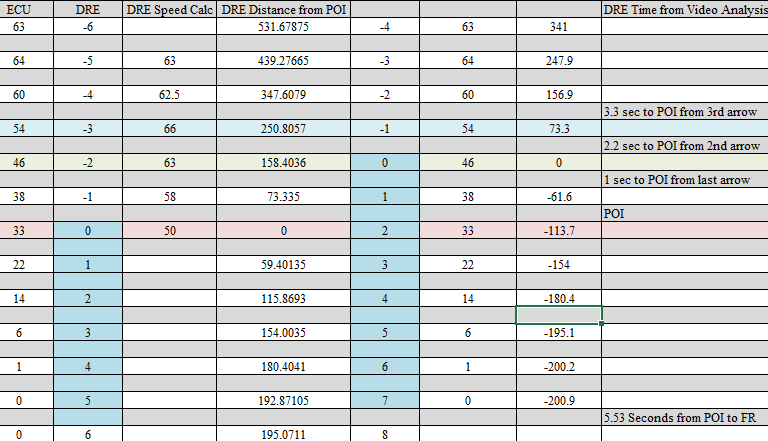
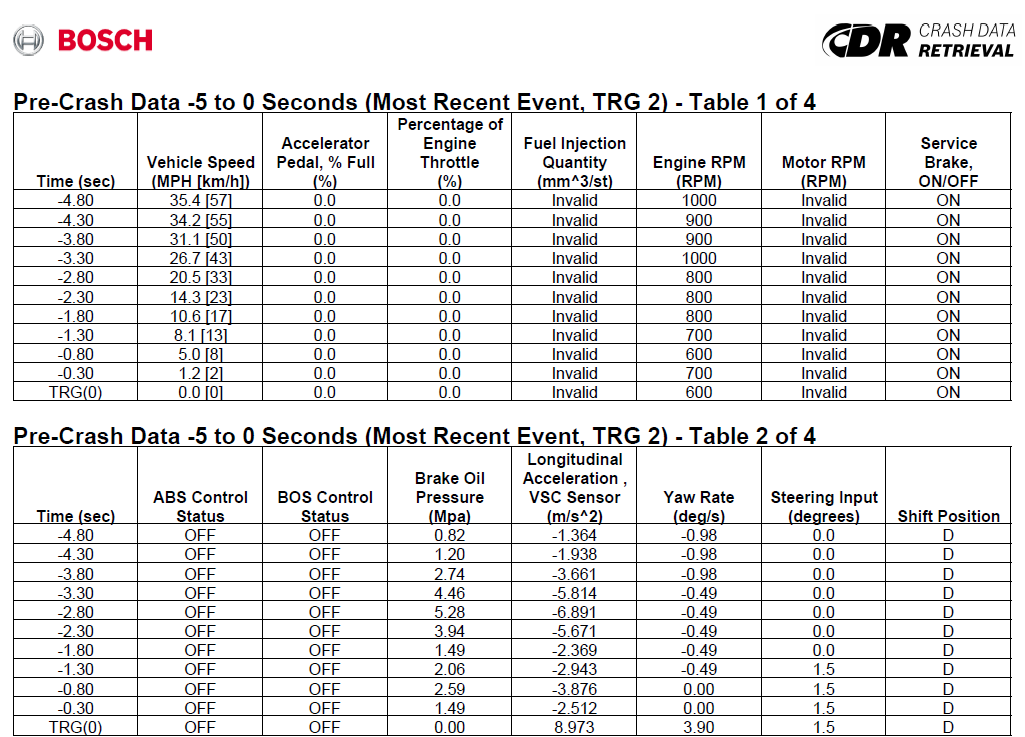
Analyzing data from a vehicle’s airbag control module (ACM) and engine control module (ECM) can provide valuable insight into vehicle behavior before and during a crash, but the process involves several technical complexities. Different vehicle manufacturers record different parameters, use varying sampling rates, and apply unique algorithms to calculate values such as vehicle speed or delta-V. As a result, investigators must understand the specific design and data structure of the vehicle being analyzed. Even when using standardized extraction tools such as the Bosch Crash Data Retrieval (CDR) System, the interpretation of the retrieved data requires knowledge of how that particular vehicle platform processes and stores information.
Another challenge involves the limitations of sensors and derived measurements. Vehicle speed values are often calculated from wheel speed sensors rather than direct ground speed, which can be affected by tire slip during braking or impact events. Additionally, some parameters—such as delta-V or crash pulse data—are internally calculated using manufacturer-specific algorithms. Differences in data recording intervals between ACM and ECM systems can also complicate analysis, requiring investigators to carefully align electronic records with physical evidence, scene documentation, and other available data sources.
Because the recorded data typically covers only a short time window surrounding a crash, it must be interpreted alongside traditional accident reconstruction evidence such as vehicle damage, roadway marks, and scene measurements. Proper data preservation and extraction procedures are also critical to prevent data loss and ensure admissibility in legal proceedings. For this reason, reconstructionists often integrate electronic data with engineering analysis and modeling tools such as Virtual CRASH to verify that the recorded values are consistent with the physical evidence and known principles of vehicle dynamics
We offer the expertise you need to analyze your data!